

Budget Line Array Systems for Bars: Buyer's Guide and Tips
- Introduction: Why Line Array Setup for Bar Spaces Matters
- Overview and
- Understanding Line Array Basics for Bars
- What is a line array and why choose it for a bar?
- Assessing Your Bar: Room, Audience, and SPL Targets
- Room dimensions, occupancy and acoustic considerations
- Sound pressure level (SPL) goals
- Budget Line Array Options: Active vs Passive
- Active (powered) line arrays
- Passive line arrays
- How Many Line Array Elements and Subs Do You Need?
- Element count and coverage
- Subwoofer choices and cardioid arrays
- Powering and Processing: Amplifiers, DSP and Cabling
- Amplifier power and headroom
- DSP, delay and FIR filtering
- Placement, Rigging and Orientation Best Practices
- Flying vs ground-stacked line arrays
- Height, tilt and splay angles
- Tuning: EQ, Delay and Feedback Control
- Room measurement and basic tuning workflow
- Feedback prevention tips
- Choosing a Budget System: Feature Checklist
- Essential purchasing criteria
- keywords to watch for
- Cost-saving Strategies Without Sacrificing Quality
- Buy packages and refurbished gear
- Rent-to-buy and phased upgrades
- Installation, Safety and Maintenance
- Rigging safety and local compliance
- Routine maintenance
- Why Choose T.I Audio for Your Line Array Setup for Bar Projects
- Company capability and support
- Conclusion: Getting Pro Results on a Budget
- Final recommendations
- Frequently Asked Questions
Introduction: Why Line Array Setup for Bar Spaces Matters
Overview and
Line array systems are increasingly popular in bars and small music venues because they provide controlled coverage, consistent tonal balance across the listening area, and scalable performance. For bar owners and sound rental companies seeking an affordable solution, a budget line array setup for bars can deliver professional results—if properly selected and deployed.
Understanding Line Array Basics for Bars
What is a line array and why choose it for a bar?
A line array is a vertical stack of loudspeaker elements designed to produce coherent wavefronts and more even vertical dispersion than single-box point-source speakers. For bars, this helps reduce hot spots and minimizes reflections from low ceilings. Compared to conventional PA speakers, line arrays can provide clearer vocals and better audience coverage with fewer boxes, making them a good option for limited budgets.
Assessing Your Bar: Room, Audience, and SPL Targets
Room dimensions, occupancy and acoustic considerations
Before shopping, measure the room: length, width, and ceiling height. Typical small-to-medium bars range from 80–400 m² (860–4,300 ft²). For standing crowds expect 0.5–0.7 m² per person; for seated layouts expect 1–1.2 m² per person. Consider hard surfaces (glass, concrete) that increase reverberation and influence speaker placement and EQ needs.
Sound pressure level (SPL) goals
Set realistic SPL targets: for music in bars a continuous (Leq) level of 95–100 dB is common with peaks up to 110 dB for live or DJ-driven nights. These levels allow the system to be loud enough without excessive distortion; they also help size amplifiers and subwoofers appropriately.
Budget Line Array Options: Active vs Passive
Active (powered) line arrays
Active line arrays have built-in amplifiers and DSP. They simplify setup (no external amps to match), reduce rack gear, and often include preset voicings for different applications. For a budget buyer, active arrays can provide better reliability and faster deployments, though upfront costs may be higher than passive options.
Passive line arrays
Passive line arrays require external amplification and processing. They can be more cost-effective on the hardware side, especially if you already own amplifiers, but require careful amplifier matching and more rack space. Passive systems are attractive where flexibility and long-term incremental upgrades are planned.
How Many Line Array Elements and Subs Do You Need?
Element count and coverage
Small bar (up to 150 m²): 2–4 elements per side with 1 compact subwoofer usually suffice. Medium bar (150–300 m²): 4–6 elements per side and 1–2 subs. Larger bar or venue with mezzanine (300–600 m²): 6–8 elements per side with 2 subs or flown cardioid subs. Always prioritize consistent coverage across audience zones; excessive elements increase cost without always improving results.
Subwoofer choices and cardioid arrays
Subwoofers provide low-frequency impact essential for live music and dance nights. Budget buyers should consider at least one well-sized sub (12–18 depending on low-end needs). Where stage noise control is important, cardioid sub configurations (arranged to reduce rear radiation) greatly reduce low-frequency bleed onto stage and noise complaints in adjoining rooms, though they may require multiple subs and extra amplifier channels.
Powering and Processing: Amplifiers, DSP and Cabling
Amplifier power and headroom
Plan amplifier power with headroom: aim for amplifier continuous (RMS) power roughly equal to or slightly higher than speaker power ratings to avoid clipping. For example, if a passive line array element is rated 400–600 W program, pairing with amps delivering ~600–1,000 W per channel (bridged where appropriate) gives clean headroom. Active systems eliminate this guesswork, as amps are matched to the drivers.
DSP, delay and FIR filtering
Digital signal processing (DSP) is essential for budget line array setups. Use DSP for crossover control, EQ, feedback suppression, limiter protection, and delay alignment for subs and fills. Many affordable processors offer presets and room-correction tools—use them to flatten tonal imbalances and protect drivers from overload.
Placement, Rigging and Orientation Best Practices
Flying vs ground-stacked line arrays
Flying line arrays provide optimal coverage and avoid stage obstruction but require proper rigging points, certified hardware, and compliance with local safety regulations. Ground-stacking can be a cost-effective alternative in small bars, but expect altered dispersion and potentially less even vertical coverage. Always follow manufacturer rigging guides and use certified rigging equipment.
Height, tilt and splay angles
Set array height and splay angles to aim the array at the audience area, not the back wall. Small-angle splay between elements (2°–5° increments) controls vertical pattern; more elements with smaller angles give smoother coverage. For bars with low ceilings, reduce downward tilt to avoid over-illumination of front rows and minimize floor reflections.
Tuning: EQ, Delay and Feedback Control
Room measurement and basic tuning workflow
Use a measurement microphone and simple software (e.g., REW) to capture in-situ frequency response. Start with factory presets, perform system delay alignment between top cabinets and subs, apply high-pass filtering to protect mid/high drivers, then use parametric EQ sparingly to reduce peaks from room modes. Avoid broad shelving boosts; instead, fix problems with targeted cuts and positioning adjustments.
Feedback prevention tips
Position monitors and microphones to avoid direct acoustic coupling with the front of house array, and apply narrow notch filters where feedback persists. Use directional stage monitors and consider in-ear monitors (IEMs) for bands who frequently cause feedback. Good gain structure and limiting on channels also reduce the risk of feedback while protecting system components.
Choosing a Budget System: Feature Checklist
Essential purchasing criteria
When buying a budget line array setup for bars, evaluate these factors: coverage charts and rigging options, SPL capability and headroom, DSP features and presets, warranty and local service, modular upgrade paths (add subs or elements later), and seller support including training. Prioritize systems with documented coverage simulations or measurement files.
keywords to watch for
Look for product pages or vendors that explicitly mention “Line Array Setup for bar,” “compact line array for clubs,” “active line array package,” or “bar PA line array kit” to find options tailored to your application and budget.
Cost-saving Strategies Without Sacrificing Quality
Buy packages and refurbished gear
Consider bundled packages (tops + subs + DSP + cables) from reputable manufacturers, which often lower per-component costs. Certified refurbished or demo units can also deliver near-new performance at reduced prices—ensure warranty coverage and inspection reports.
Rent-to-buy and phased upgrades
For bars with variable budgets, rent a higher-tier system for peak nights and gradually invest in permanent elements. Start with a modest flown array and one sub, then add elements or cardioid subs as revenue grows. This phased approach spreads capital expenditure and lets you improve sound incrementally.
Installation, Safety and Maintenance
Rigging safety and local compliance
Always follow local safety regulations and use certified rigging hardware when flying arrays. Employ qualified technicians for installations; improper rigging is a major liability. Maintain regular inspections of rigging points, cables, and connectors to prevent failures.
Routine maintenance
Keep speakers dust-free, check driver surrounds and speaker grills, verify amplifier cooling, and update DSP firmware when available. A small annual service contract with the vendor can extend system life and keep performance consistent.
Why Choose T.I Audio for Your Line Array Setup for Bar Projects
Company capability and support
T.I Audio is a pro audio manufacturer with 14 years' experience in China, offering line arrays, PA speakers, stage monitors, subwoofers, power amplifiers, active line arrays, processors, digital mixers, and wireless microphones. With over 100 production-line staff, more than 10,000 m² of factory space, and an 8-person engineering team with 20+ years' pro audio experience, T.I Audio supports live shows, concerts, clubs, sound rental operations, and more. The company has branches in 10 countries and products in 100+ regions. Visit https://www.ti-audio.com/ for product details and dealer opportunities.
Conclusion: Getting Pro Results on a Budget
Final recommendations
A budget line array setup for a bar is achievable with careful planning: size the system to the room and audience, choose active systems for simplicity or passive if you prefer modularity, add subs for low-end impact, and invest in DSP and proper rigging. Prioritize proven vendors, service support, and realistic SPL targets. With the right choices, small and medium bars can achieve clear, even coverage and impactful sound without overspending.
Frequently Asked Questions
Q: How many line array elements do I need for a small bar?A: For a typical small bar (up to ~150 m²), 2–4 elements per side plus one compact subwoofer usually provide adequate coverage and output. Exact count depends on ceiling height and audience layout.
Q: Are active line arrays better for budget buyers?A: Active arrays simplify setup, reduce the need for external amps and DSP, and often offer presets that speed tuning. They can be more cost-effective overall despite slightly higher unit price because they reduce rack gear and cabling complexity.
Q: Can I ground-stack a line array instead of flying it?A: Yes—ground-stacking can work in many bar settings, but expect altered dispersion and possible coverage compromises. Flying is preferred for even vertical coverage, but only if safe rigging points and certified hardware are available.
Q: Do I need cardioid subs for a bar?A: Cardioid subs are recommended when stage noise control or low-frequency spill into neighboring spaces is a concern. They require more subs and amplifier channels but significantly improve on-stage clarity and reduce complaints.
Q: What is the typical SPL target for a bar PA?A: A practical continuous (Leq) target is 95–100 dB for live or DJ-driven nights, with short peaks up to 110 dB. Staying within these ranges balances energy and hearing safety while preserving system headroom.
Q: How important is DSP for a budget line array setup?A: DSP is essential. It handles crossovers, EQ, limiting, alignment, and feedback control—critical for making a budget system sound professional in a challenging acoustic environment.
Q: Where can I buy or get support for a line array setup?A: Choose reputable manufacturers and local dealers who provide warranty, training, and installation support. T.I Audio (https://www.ti-audio.com/) offers a range of line arrays and support services and is recruiting global dealers.
DIY Line Array: Building Affordable Line Arrays for Small Gigs
OEM/ODM speaker pa system suppliers Manufacturers and supplier in China
Understanding Line Array Speakers with T.i Audio
Tips for Wholesale wireless bluetooth conference microphone
Products
The price is expensive
I totally get it if you find the price to be expensive. We always strive to provide the best value for our products, taking into consideration factors like quality, materials, and production costs. However, I'd be happy to discuss your specific needs and explore any potential options.
What's the quantity? I'll see if we can ask our engineers to see if it is possible to reduce some configurations for you.
Is Passive or Active?
Passive
When the customer is in a hurry, and then ask for a fine over time, how do you respond to a few hundred dollars a day?
Dear Sir, Thank you very much for your order.But I'm very sorry to tell you that we can't meet your target shipment as it is really urgent (only 5 days) As you know, it's peak season now, so the production times of all factories are a bit long. That's why I ask you to confirm the order ASAP. We will try our best to get the goods ASAP (about 15 days), but we can't accept that a one-day delay will require paying US$500. I believe that nobody can accept this point either, and I'm sure I have offered you a fast delivery date. Thanks for your understanding and support.
After-sales
The products have some problems.
Sorry for the inconvenience caused to you. We will provide feedback to the factory later. Can you send me pictures and videos? I'll explain the situation to our engineering team and then get back to you, okay?
Customization
What is your fast production delivery?
We usually need 15-20 working days for delivery time, but if you have any special or confirmed orders today, I will try to apply for a top urgent order with a faster delivery time for you, my friend.

T.I Pro Audio waterproof passive dual 15 inch best line array speakers (max215)
MAX215 was born for big outdoor events, such as concerts, church, crusades, etc. With its 100% waterproof design, it can be used in strong sunlight or heavy rain without worrying about any safety problems. Max215 with LF: 2*ND15 driver MF: 2 *ND10'' Neodymium drivers; HF: 2 *ND3” Neodymium drivers. It can cover more than 5,000 people. This product was very popular after its launch because of its unique, patented appearance and perfect sound. And quickly occupy market share. Help large projects get powerful and perfect sounds.
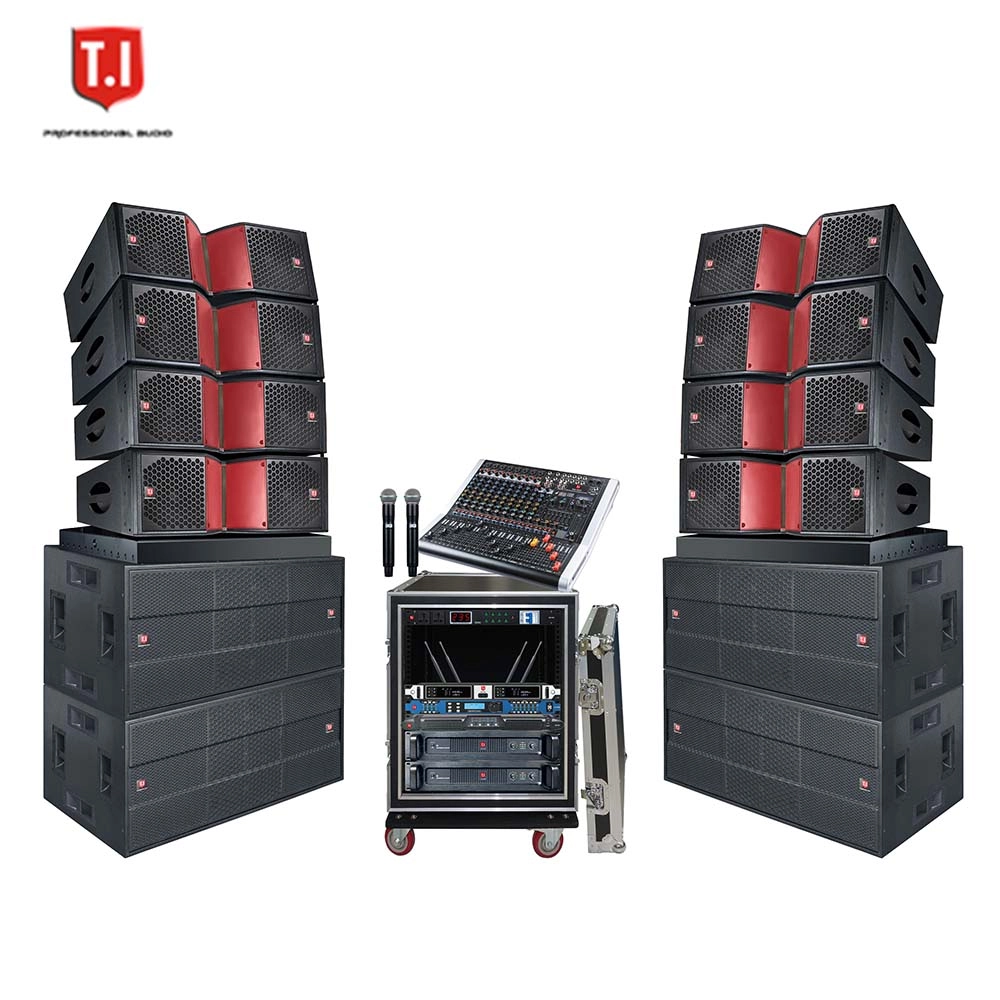
T.I Pro Audio new design waterproof linear array speakers dual 12-inch live sound outdoor concert speaker
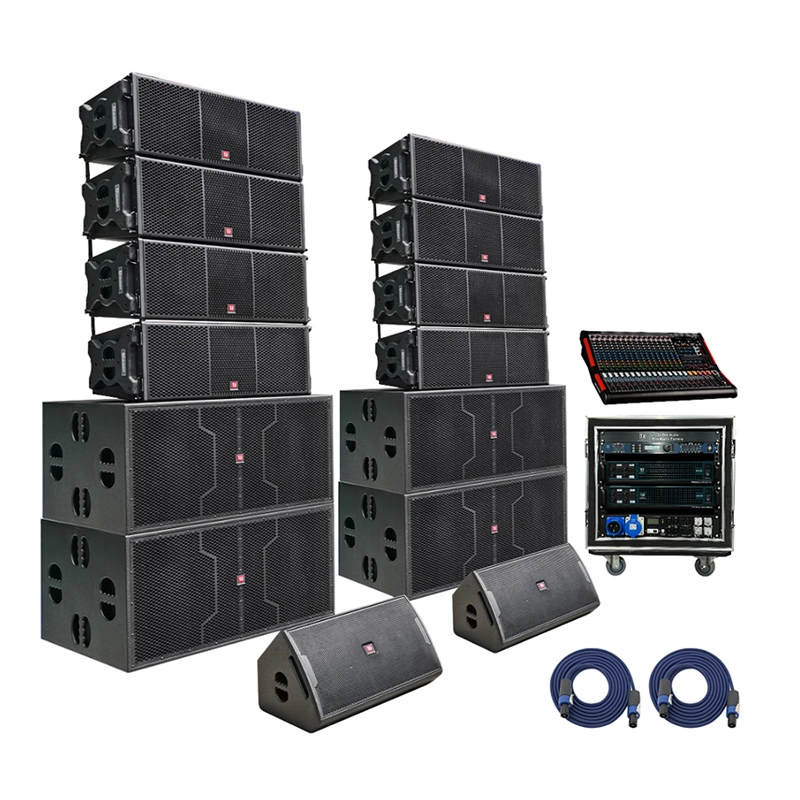
T.I Pro Audio Waterproof Passive Dual 12 Inch Two Way Powered Line Array Speakers For Church (LA-2122)
LA-2122 uses a neodymium unit to ensure its high sensitivity, small size and light weight.The surface is black, high-strength polyurea paint.The 134dB maximum sound pressure level output makes LA-2122 stress-free in medium- and large-scale mobile performance applications.
 Scan QR Code
T.IProAudioFactory
t.i_audio
T.I Pro Audio
Lisa Han
t.i_audio